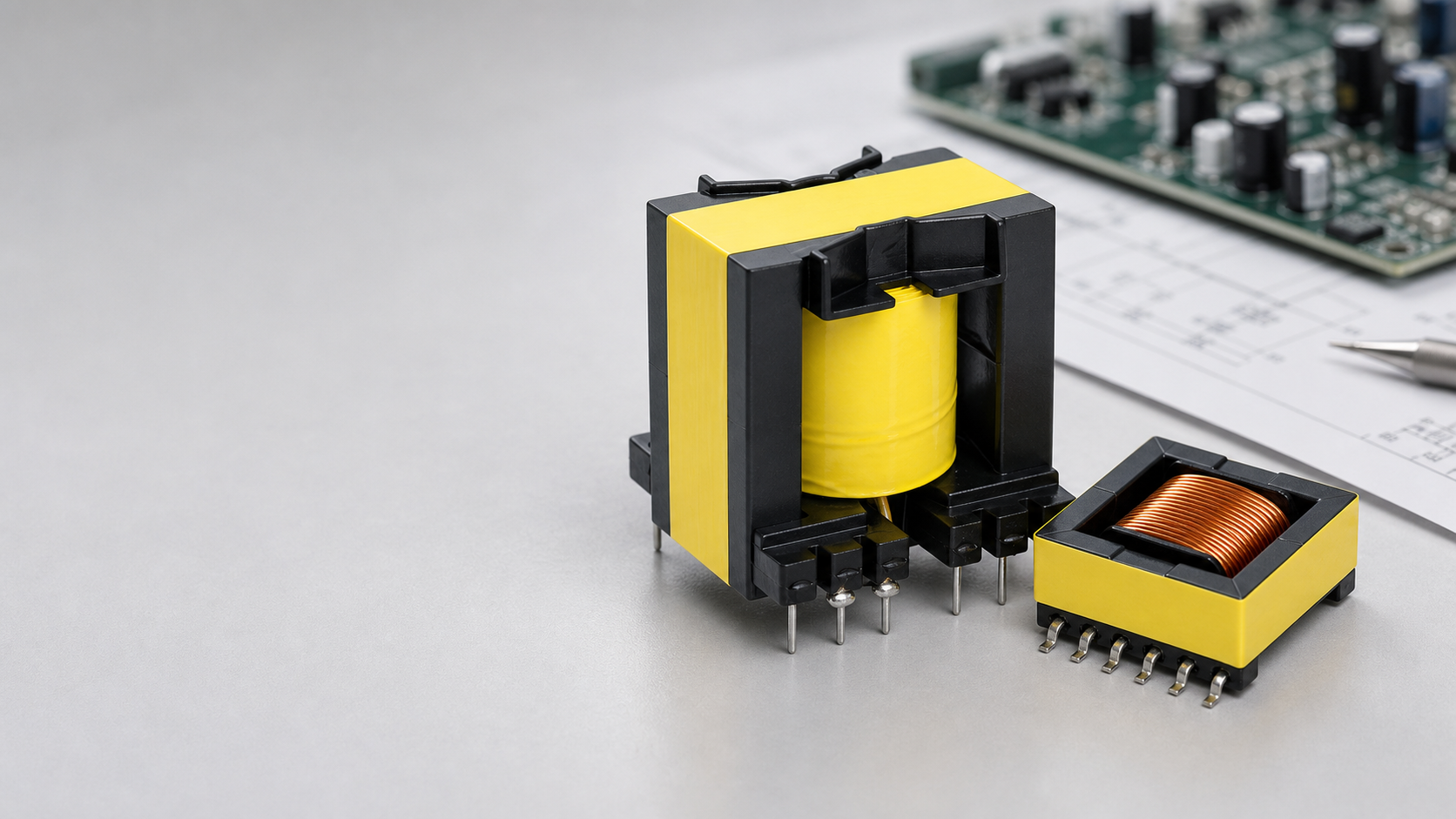
Ferrite transformer core, copper windings, and power electronics hardware on an engineering workbench

Advanced Magnetics Design

Custom transformer and inductor design consulting for power electronics.

Advanced Magnetics Design helps engineers and manufacturers design, review, troubleshoot, and reverse-engineer custom transformers, inductors, chokes, high-voltage magnetics, and hard-to-source specialty magnetic components.

30+ years electrical engineering experience 12+ years focused on custom magnetics Former engineering manager at a custom magnetics manufacturer U.S.-based remote consulting
Primary specialty High-frequency custom transformers and inductors for power-conversion equipment.
Also supported Reverse engineering, second-source replacements, chokes, current-sense transformers, and specialty high-voltage or low-frequency work.
When custom magnetics are needed Custom magnetics bridge the gap between the power source, circuit topology, and electrical output the equipment requires.

Services

Specialized transformer and magnetic-component design for power-conversion and specialty equipment.

You bring the circuit requirement, sample part, supplier drawing, or production problem. Advanced Magnetics Design develops the component details and documentation needed for review, quotation, prototype build, or manufacturing transfer.

Common reasons customers contact me

  • A custom transformer is overheating, saturating, noisy, or failing hipot.
  • A supplier part is obsolete, unavailable, inconsistent, or too poorly documented to source confidently.
  • A prototype works electrically but misses thermal, leakage, regulation, size, or isolation targets.
  • A physical sample exists, but no usable drawing, winding data, material list, or test requirement exists.
  • A manufacturer needs clearer winding, insulation, termination, inspection, or test documentation.
Service Typical inputs Typical outputs

Custom magnetic-component design

Topology, voltage range, frequency, duty cycle, current targets, isolation needs, mechanical limits.

Core, winding, insulation, wire, termination, construction notes, and test requirements.

Redesigns and second sources

Existing drawing, sample, supplier issue, cost target, material constraint, required fit/form/function match.

Alternate construction, material substitutions, equivalent magnetic targets, updated build documentation.

Reverse engineering

Physical sample, markings, operating information, available measurements, need for functional or exact replacement.

Electrical characterization, dimensions, pinout, winding details, material list, drawing/specification package.

Magnetic design reviews

Customer drawing, sample data, prototype measurements, thermal data, known design concerns.

Review of winding structure, insulation system, saturation margin, heating risk, leakage concerns, and manufacturability.

Magnetic component failure review

Failed and known-good samples, waveforms, operating conditions, test data, production history.

Focused review of overheating, saturation, insulation failure, poor regulation, material issues, and build variation.

Capabilities

Switching-transformer experience, supported by broad custom-magnetics capability.

The main focus is custom transformer and inductor design for power electronics. Related magnetics work is supported when it fits the project need and available information.

Primary power-conversion work

  • Flyback, forward-converter, push-pull, half-bridge, and full-bridge switching transformers
  • Power inductors, PFC inductors, common-mode chokes, differential-mode chokes, air-core inductors, and gapped magnetic components
  • Planar, foil, litz-wire, flat-wire, and conventionally wound magnetic components
  • Core, winding, insulation, leakage, loss, thermal, and manufacturability tradeoffs for power electronics

Specialty and replacement work

  • Encapsulated transformers, low-frequency laminated-steel power transformers, and tape-wound / ring-core toroidal transformers
  • Audio transformers, impedance-matching transformers, current-sense transformers, autotransformers, and custom multiwinding transformers
  • Second-source replacement, redesign, material substitution, and documentation recovery from drawings or samples

Engineering topics

  • Core-material, core-geometry, and air-gap selection
  • Turns, winding structure, wire, foil, litz-wire, and flat-wire design
  • Flux-density, saturation, ripple-current, and energy-storage analysis
  • Core loss, copper loss, skin-effect, and proximity-effect analysis
  • Leakage inductance, interwinding capacitance, EMI, and regulation optimization
  • Insulation system, creepage, clearance, thermal rise, and manufacturability review

Reverse-engineering deliverables

  • Destructive reverse engineering for exact-replacement work, layer-by-layer documentation, and manufacturer quoting
  • Non-destructive analysis for functional replacement designs when the original part must remain intact
  • Electrical measurements, pinout, phasing, dimensions, core/bobbin details, and construction notes based on the selected analysis method
  • Build documentation, material list, winding details, insulation notes, inspection points, and specification package

Design/Build Outputs

  • Custom magnetic design or replacement component specifications based on customer requirements, samples, or available design information
  • Core, bobbin, winding, insulation, wire, foil, litz-wire, tape, shield, and termination details
  • Volt-second capability, turns, winding order, phasing, pinout, and construction documentation
  • BOM, build notes, inspection points, test requirements, and specification package

Review and troubleshooting support

  • Independent review of customer drawings, supplier data, prototypes, or incomplete magnetic-component documentation
  • Focused investigation of overheating, saturation, poor regulation, leakage-inductance issues, insulation failures, and build variation
  • Recommendations for prototype changes, second-source paths, documentation cleanup, and production handoff

Project Flow

A clear path from first contact to a usable magnetic-component package.

The first step is not guessing at a design. It is understanding what information exists, what is missing, and whether the project requires a new design, a functional replacement, an exact replacement, a review, or a failure investigation.

  1. 01

    Intake review

    Advanced Magnetics Design reviews the component type, application, available drawings or samples, operating information, failure symptoms, and requested result.

  2. 02

    Missing-information questions

    Open items are identified before design, review, teardown, characterization, or documentation work begins.

  3. 03

    Scope and quotation

    The project path, deliverables, sample handling, destructive or non-destructive analysis method, documentation depth, and schedule are agreed before work authorization.

  4. 04

    Engineering work and results

    Work proceeds as custom design, reverse engineering, redesign, characterization, failure review, or documentation support, with results delivered in the agreed format.

Reverse Engineering

Reverse-engineer an existing magnetic component for functional replacement or detailed build documentation.

A submitted sample can be evaluated without damage or destructively taken apart, depending on whether the goal is to preserve the sample, create a functional replacement, or document the original construction in detail.

Transformer reverse-engineering workbench with removed EE core halves, exposed winding, calipers, notes, and tools

Non-Destructive Characterization

Electrical and mechanical data can be collected while returning the sample intact. This path supports a functional replacement design when enough operating information is available.

  • Customer operating information: applied voltage, frequency, waveform type, duty cycle, and load conditions when available
  • Inductance, DCR, leakage inductance, winding-to-winding capacitance, and turns ratio
  • Pinout, phasing, core size, mechanical dimensions, mounting, and external construction details
  • Functional replacement design based on measured data and available operating conditions

Destructive Teardown Specification

Destructive teardown is used when the goal is detailed construction documentation. The submitted sample is disassembled layer by layer and normally cannot be returned intact.

  • Winding sequence, turn counts, wire sizes, and winding relationships
  • Internal insulation, tape, sleeving, shields, margins, splices, and terminations
  • Core, bobbin, wire, foil, litz, tape, varnish, and material details
  • Build notes needed for a manufacturer to quote or reproduce the part

Drawing / Specification Package

Advanced Magnetics Design can provide a drawing/specification package for either reverse-engineering path. A non-destructive package supports a functional replacement; a destructive teardown package documents the submitted sample's construction.

  • Electrical and mechanical summary, schematic, dimensions, and markings
  • Material list, winding information, lead details, and termination notes
  • Insulation sequence, construction notes, manufacturing notes, and inspection points
  • Customer, project, prepared-by, title, part number, revision, and sheet fields
Typical uses: obsolete or unavailable parts, second-source replacement, failed or incomplete supplier documentation, production troubleshooting, manufacturing transfer, redesign support, cost reduction, and recovery when only a physical sample is available.
Sample handling: do not ship samples until the project objective, required work, sample condition, and return-or-teardown expectations have been reviewed and agreed.
Reverse-engineering limits: reverse engineering can document construction and measured behavior, but exact material grade, proprietary processing, and production variation may require engineering judgment or supplier confirmation.
Safety and approvals: final safety certification, agency approvals, and production validation remain the responsibility of the product manufacturer unless separately contracted.
Craig Lombard, Principal Engineer at Advanced Magnetics Design
Craig Lombard Principal Engineer

About

Transformer and magnetic-component design from a hands-on magnetics specialist.

I am Craig Lombard, Principal Engineer at Advanced Magnetics Design. I have more than 30 years of electrical engineering experience, including over 12 years focused entirely on custom transformer, inductor, choke, and magnetic-component design.

My work focuses on practical magnetic components for switching power supplies, inverters, high-voltage equipment, isolation circuits, industrial electronics, and specialized electrical systems.

I have designed magnetic components ranging from one-off specialty parts to production components requiring voltage conversion, isolation, high-voltage output, current sensing, impedance matching, or custom magnetic performance.

I also served for more than a decade as electrical engineering manager for a custom magnetics design and manufacturing company, giving me direct experience with both the engineering work and the realities of building magnetic components.

Advanced Magnetics Design supports projects that begin with circuit requirements, customer samples, existing drawings, failed prototypes, or production issues. Work can include custom magnetic design, reverse engineering, redesigns, second-source replacements, design reviews, winding specifications, material lists, test requirements, and manufacturing documentation.

Project intake

Start with the component, the requirement, or the problem.

Advanced Magnetics Design can begin with a new transformer requirement, an existing supplier drawing, a sample to reverse engineer, a failed prototype, production test data, or a thermal, regulation, isolation, saturation, or leakage-inductance issue that needs focused engineering review.

Project scope is reviewed before quotation so the work matches the required engineering depth, documentation, testing, and schedule.

Request engineering review / quote